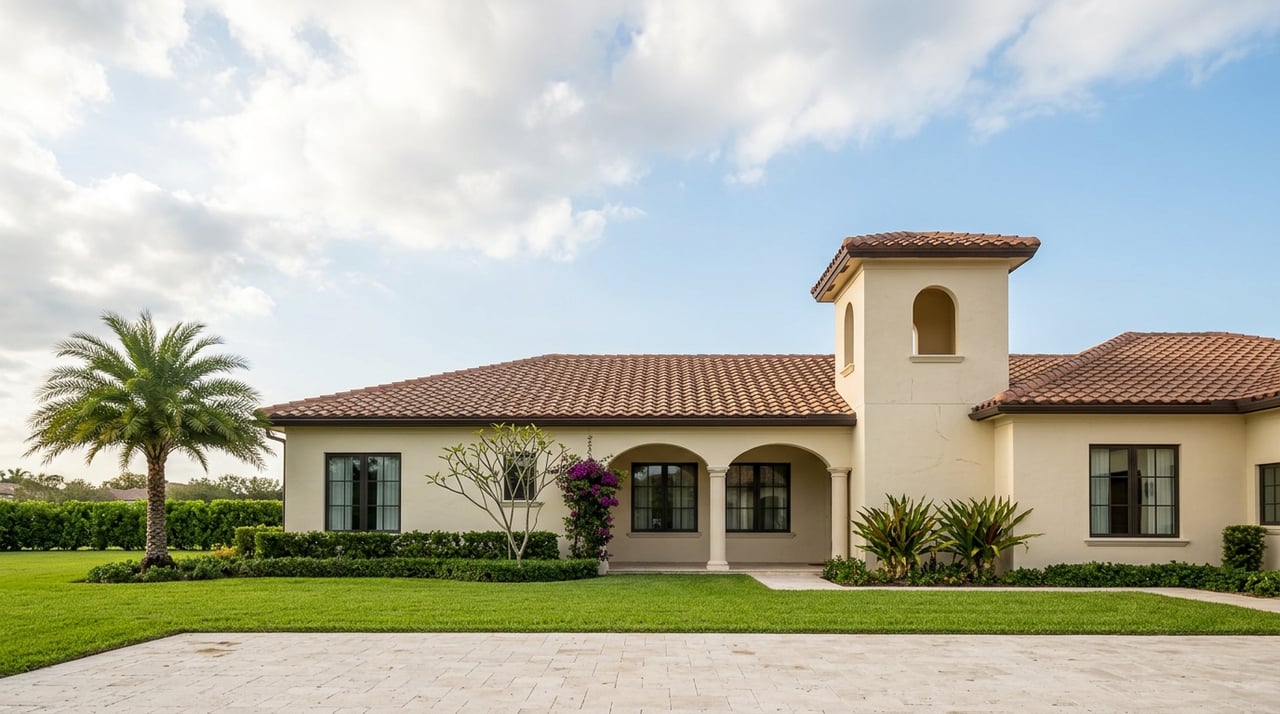
Guaynabo Luxury Homes Guide to Top Family Communities
June 4, 2026
June 4, 2026
Wondering where you can find an upscale primary-home lifestyle in Puerto Rico without giving up metro convenience? For many buyers, Guaynabo stands out because it blends access-controlled residential areas, strong everyday convenience, and a location inside the San Juan metro area. If you are comparing communities for family living, this guide will help you understand what makes Guaynabo’s signature enclaves so appealing and how to think about the lifestyle fit. Let’s dive in.
Guaynabo offers a suburban feel within the San Juan metro area, which is a big part of its appeal. The municipality covers 27.59 square miles and had 89,780 residents in the 2020 Census, giving you a more compact setting than the capital while still keeping you close to major urban centers.
For many buyers, the numbers also reinforce Guaynabo’s position as a strong primary-home market. Owner-occupied housing was 72.4%, mean commute time was 24.5 minutes, and the 2023 median family income was $59,553, the highest among Puerto Rico municipalities according to the research provided. Those indicators point to a market where many residents put down roots and prioritize day-to-day livability.
Guaynabo also carries a layer of historic identity that gives the area character. Caparra, the first Spanish settlement in Puerto Rico, was founded in 1509 in what is now Guaynabo, and the municipality itself was founded in 1769. You still see that legacy reflected in place names such as Villa Caparra.
In practice, many buyers do not look at Guaynabo as one single neighborhood. They tend to evaluate it as a network of connected communities and sub-communities, each with its own housing mix, access pattern, and convenience profile.
Names that show up often in municipal records and current inventory include Garden Hills, Garden Hills Norte, Villa Caparra, Villa Caparra Norte, Villa Caparra Executive, Parque de Villa Caparra, La Villa de Torrimar, and Torrimar Town Park. That matters because your search may be more successful if you think in terms of zones and enclaves rather than one broad label.
The Garden Hills-Torrimar area is one of the clearest examples of Guaynabo’s upscale residential character. The municipal territorial plan identifies this zone as a residential area with 12,135 residents, and it notes that almost all urbanizations in the area have access control.
This same zone benefits from a strong convenience story. Torrimar station sits inside the area, and Caparra Country Club is also located there, with amenities that include an Olympic pool, basketball and tennis courts, and a baseball park. For buyers who want a neighborhood that feels established and practical, that combination can be very attractive.
Housing patterns in Garden Hills also support a family-home search. Current portal searches are focused largely on single-family homes, including gated and custom-built options. If your priority is a detached residence in a mature Guaynabo setting, Garden Hills is often part of the conversation.
Villa Caparra offers a more varied housing picture, which can be helpful if you want flexibility in property type or price point. Municipal ordinances confirm controlled access in Villa Caparra, while Extension Villa Caparra has local traffic and parking regulation that reflects a structured residential environment.
Current inventory suggests you may see more than one type of home here. Listings include controlled-access single-family homes in Villa Caparra, condo options in Villa Caparra Executive, and townhouses in Parque de Villa Caparra. In other words, this area can appeal to buyers who want the identity of an established Guaynabo address without limiting themselves to only one housing format.
La Villa de Torrimar is another name that often comes up for buyers seeking an access-controlled setting. The community’s site emphasizes controlled access and security, while municipal planning documents place Torrimar station and special planning attention inside the broader area.
The public-service framework around Torrimar is also notable. The municipality maintains a Torrimar police precinct and a Torrimar transport route, which adds to the area’s everyday functionality. Current inventory points to a mix of detached homes in La Villa de Torrimar and attached-home options such as Torrimar Town Park.
When you are buying a primary home, daily routines matter as much as the home itself. Guaynabo performs well here because many of its signature communities connect to transit, retail, recreation, and services in ways that are less common in a suburban market.
Guaynabo is car-friendly, but it also offers transit options that stand out in Puerto Rico. The Tren Urbano connects San Juan, Guaynabo, and Bayamón, and official planning documents place Torrimar within Guaynabo’s network.
The municipal bus system adds another layer of convenience. Service runs Monday through Friday from 6:00 a.m. to 5:00 p.m. and Saturdays from 8:00 a.m. to 4:00 p.m., with routes serving Torrimar, Amelia, Esmeralda, Guaraguao/Santa Rosa, and other areas. For you, that means Guaynabo can support a commute pattern that is primarily car-based but not entirely dependent on driving.
For many buyers, access to private schools is an important part of choosing where to live. Official school pages place Colegio Marista in Alturas de Torrimar, Wesleyan Academy in Guaynabo, and Commonwealth-Parkville School with a Guaynabo elementary campus.
That does not mean every home is equally convenient to every campus, but it does reinforce why Guaynabo is often part of the conversation for family buyers. If school access is part of your search, it helps to compare commute patterns from each community rather than focusing only on the home itself.
Guaynabo’s convenience story is one of its strongest points. San Patricio Plaza, founded in 1964, is a major shopping center in Guaynabo, and municipal routes stop at both San Patricio Plaza and Garden Hills Shopping. The territorial plan also references Plaza Guaynabo.
Recreation and services are woven into the same broader corridors. The research report highlights La Marquesa Forest Park, the Torrimar Tennis Club at the Torrimar Sports Complex, and medical services in Torrimar that include clinic, emergency room, lab, radiology, and pharmacy functions. A Torrimar police precinct and citywide camera coverage also contribute to the area’s service framework.
If you are comparing Guaynabo with other premium markets in Puerto Rico, its appeal becomes clearer when you define the lifestyle you actually want. Guaynabo is not trying to be a beachfront resort destination, and it is not trying to be the dense urban core either.
San Juan is Puerto Rico’s capital and a major center of history and culture, with a 2020 Census population of 342,259. Guaynabo, by contrast, is much smaller and sits within the San Juan metro area between San Juan and Bayamón.
For a buyer, that can translate into a different everyday experience. Guaynabo often appeals when you want metro access, but prefer a more compact suburban setting over the denser pace of the capital.
The comparison with Dorado is even more lifestyle-specific. Dorado is strongly associated with beach and resort assets, including Dorado Beach and its luxury hospitality profile.
Guaynabo centers on a different value proposition. Its identity is tied more closely to access-controlled residential enclaves, schools, transit, retail corridors, and municipal services. If your priority is an upscale primary-home lifestyle with practical metro access, Guaynabo may be the better fit.
Because Guaynabo works as a network of enclaves, a focused search strategy matters. Looking only at list price or bedroom count can cause you to miss the lifestyle differences between nearby communities.
Here are a few smart filters to use as you compare options:
This approach helps you match the right home to the way you actually live. In a market like Guaynabo, small location differences can shape your daily routine in a big way.
Guaynabo’s signature communities stand out because they combine what many primary-home buyers want most: established residential areas, controlled-access settings in many enclaves, varied housing options, and real everyday convenience. Garden Hills, Torrimar, Villa Caparra, and their related sub-areas each offer a slightly different version of that lifestyle.
If you are searching for upscale family living in Puerto Rico and want to stay connected to the San Juan metro area, Guaynabo deserves a close look. The key is understanding not just the municipality, but the specific enclave, housing type, and routine that fit your household best.
If you want help comparing Guaynabo’s communities with the same care and discretion you would expect in any premium home search, Mariángel Martí offers personalized buyer representation and valuation guidance tailored to your goals.
Stay up to date on the latest real estate trends.
She brings 18 years of real estate expertise, a deep personal connection to the Dorado community, and a commitment to building lasting client relationships. You need a local expert who knows the business and will also provide guidance in other aspects of your lifestyle. With her intimate knowledge of the local market and dedication to providing exceptional service, Mariángel is ready to offer you the most thorough service to ensure you make a well-informed decision, making the real estate process smooth and rewarding.