Dorado del Mar Beach: What to Know Before You Go
September 17, 2026
September 17, 2026
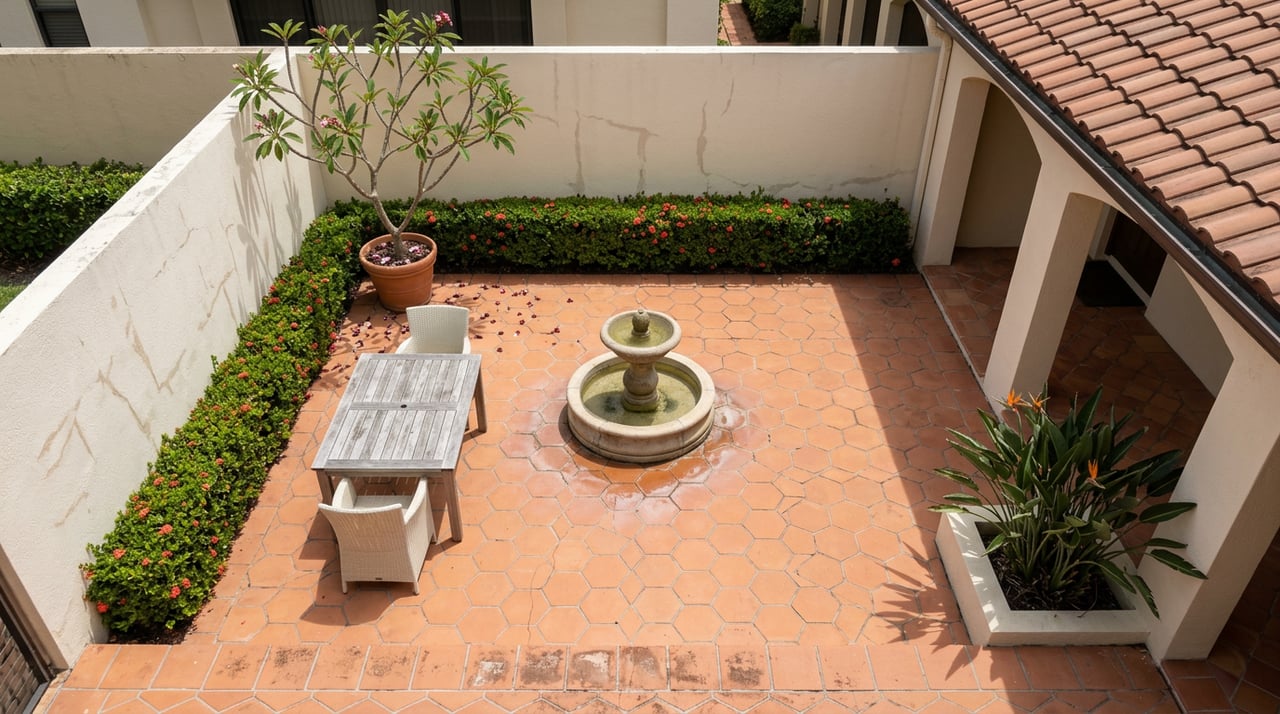
Walk down toward the water from inside Dorado del Mar and you won't find a sign. There's no marked lot, no lifeguard stand, no branded gate the way there is up the coast at the Ritz-Carlton properties. What you'll find is a residential street that happens to end at the ocean, next door to the Embassy Suites by Hilton Dorado del Mar Beach Resort, with room to park if you're patient and know where not to block a driveway. This shoreline has a residential character distinct from the nearby resort properties.
Most people who've heard of Dorado assume the beach experience here comes packaged with a resort name attached. That's true a short drive north, where Dorado Beach operates as a branded, gated, three-golf-course eco-resort. It isn't true in Dorado del Mar. The shoreline residents actually use sits adjacent to the Embassy Suites, but public access runs through the community's own streets, not through a hotel entrance. The hotel's restaurant and bar are open to anyone who walks in, which means you can end a beach morning with lunch next door without checking into a room. But the beach itself belongs to the neighborhood in a way that has nothing to do with hospitality branding. It's simply where the streets stop and the water starts.
That distinction matters because it shapes expectations. Someone picturing a resort beach expects staff, umbrellas, a rinse station. What they'll actually find is a short, unmarked path, informal curbside parking, and a stretch of coastline that behaves according to its own calendar rather than a concierge desk.
The water here is calm and shallow most of the year, which is exactly why local families treat it as a swimming spot rather than a scenic backdrop. But calm doesn't mean static. A few things change depending on when you show up:
None of this is dramatic. It's the kind of granular, season-by-season knowledge that only shows up if you've actually been going for years, which is precisely why it's worth writing down instead of assuming everyone already knows it.
The trade-off for calm, shallow water is a rocky entry on either end of the sandy stretch, which is why anyone who's used this beach more than once brings water shoes. Sea urchins tend to hide near those rocky edges, so it's worth keeping an eye on kids there specifically rather than treating the whole beach as uniformly soft sand.
The payoff for that small inconvenience is real. The shallows here function almost like a natural aquarium: tropical fish, starfish, and occasional stingrays are visible without needing to swim far from shore. It's a different kind of beach experience than a wide, wave-friendly stretch built for surfing or long swims. It's built for wading, looking down, and noticing what's actually in the water, which is a different rhythm than most visitors expect from a Puerto Rico beach day.
Parking is one practical point of comparison between the beach access and the plaza. The beach access point has room for roughly fifteen informal parking spots along the residential curb. There is no lot or striping, and enforcement relies on common courtesy about driveways.
Not far inland, Doramar Plaza, the neighborhood's retail anchor, was built with more than 800 parking spaces, in contrast to the informal curbside arrangement at the beach.
Conditions along the shoreline vary by tide and season.
The beach is one anchor. The other two are Dorado Academy and Doramar Plaza, and both have histories that explain why they function the way they do today.
Dorado Academy started in 1972, founded by a group of English-speaking neighbors inside the Dorado del Mar community who needed an English-instruction option for their children. Classes were first held at the Dorado Beach Hotel before the community's developers granted the school land and its original sales office building in 1973. The first senior class graduated in 1993, with every student accepted into universities in Puerto Rico or the mainland United States. Today the school sits at 100 Calle Madre Perla, directly across from the golf course, still serving Pre-K through 12th grade. That's not a school that was built as an amenity to sell homes. It's a school the neighborhood built for itself, decades before marketing language got involved.
Doramar Plaza is the other end of the daily loop. At 130,000 square feet, it's anchored by Capri and Walgreens, with national and local tenants including Chili's, Sizzler, Krispy Kreme, Wendy's, Church's Chicken, and El Meson Sandwiches, alongside specialty retailers like Vit Jewelry and Jennifer Fashion. It's the kind of plaza that handles the unglamorous parts of a week: a prescription pickup, a fast dinner, a birthday gift bought on the way home.
And along the beach access itself, the food is more local and less chain-driven. Roadside kiosks known as chinchorros serve fresh seafood, mofongo, and tostones, while weekend vendors sell empanadillas, bacalaítos, and piraguas at prices that have nothing to do with resort menus. It's a genuinely different food economy running a few hundred yards from a hotel restaurant, and residents move between both without much thought.
Dorado del Mar reads, on paper, like a single amenity package: hotel, golf, school, plaza, beach. In practice it's two different systems running side by side. One is managed, parked, and branded, built around Doramar Plaza's more than 800 spaces and a school now in its sixth decade. The other is the shoreline itself, with informal access and conditions that vary by turtle season and jellyfish timing.
Neither version is a downgrade. The managed side gives residents convenience they can count on every day. The unmanaged side gives them a beach that still feels like it belongs to the neighborhood rather than to a hospitality brand. The contrast between roughly fifteen informal curbside parking spots and more than 800 parking spaces at the plaza is one detail of daily life in Dorado del Mar.
If you're weighing a move to Dorado or already call it home and want a clearer read on how its different pockets actually function day to day, Mariángel Martí Real Estate has spent nearly two decades learning exactly this kind of detail about Dorado's communities. Let's Connect.
Stay up to date on the latest real estate trends.
She brings 18 years of real estate expertise, a deep personal connection to the Dorado community, and a commitment to building lasting client relationships. You need a local expert who knows the business and will also provide guidance in other aspects of your lifestyle. With her intimate knowledge of the local market and dedication to providing exceptional service, Mariángel is ready to offer you the most thorough service to ensure you make a well-informed decision, making the real estate process smooth and rewarding.