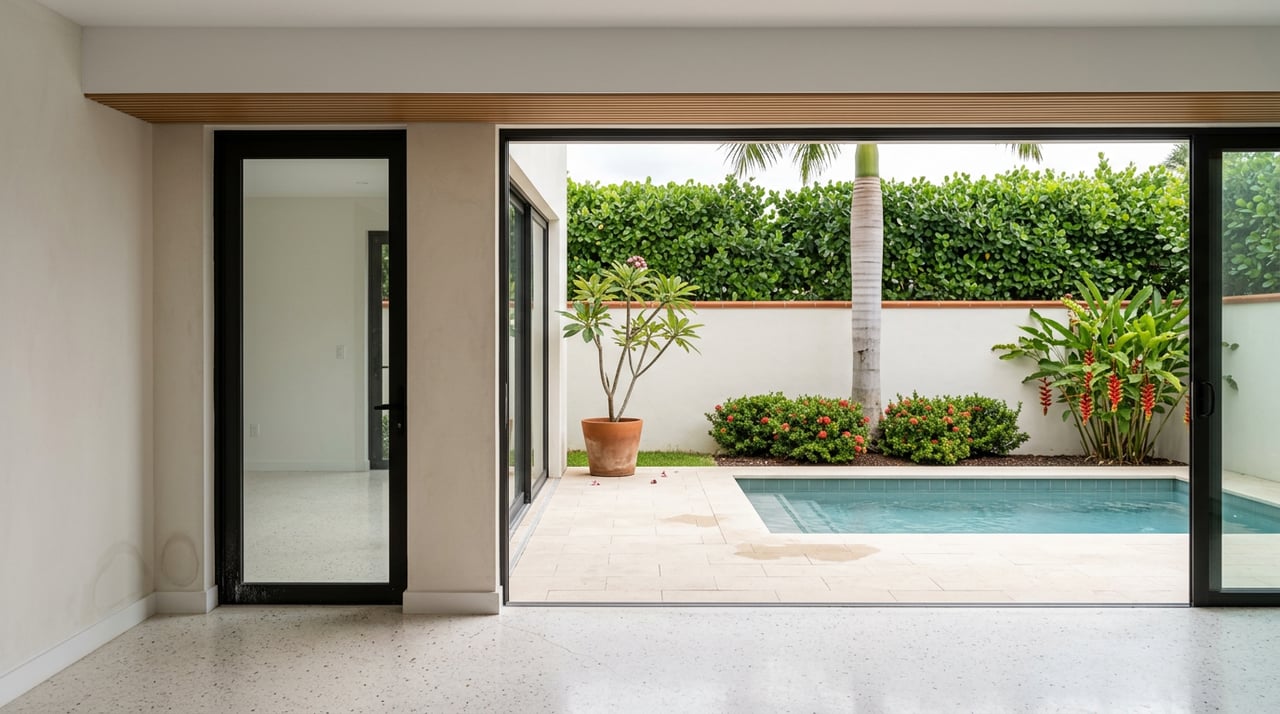
Comparing Plantation Village Dorado Beach: Building 1 vs. Buildings 2 & 3
August 20, 2026
August 20, 2026
Two listings in Plantation Village show how sharply costs can differ. One carries an HOA fee under $1,500 a month. The other lists HOA fees at $7,700 a month, plus $10,000 a year in hazard insurance. A buyer comparing them on a spreadsheet might assume the gap must be finishes, or a recent renovation, or square footage. Often it isn't. It's the building.
Plantation Village is marketed as a single community: three residential buildings, 92 apartments in total, tucked inside Dorado Beach Resort with golf course and mountain views from nearly every window. That part is consistent across every source, official and otherwise. What's inconsistent, and what actually matters if you're comparing two listings here, is how public materials describe the buildings' service and ownership arrangements, and which rights apply to the specific unit.
Public materials describe a resort-managed condo-hotel arrangement at Plantation Village, including daily housekeeping, in-unit dining service, concierge support, and mail handling delivered the way a five-star hotel would deliver them. They also describe private residences, where owners get grounds maintenance, 24-hour gated security, and a private garage, but no built-in mechanism for placing a unit into a resort-run rental pool.
Here's the part worth sitting with: public materials describing Plantation Village don't even agree on which building is which. Some sources point to the first building as the fully serviced hotel-condo. Others describe the arrangement running the opposite way, with two of the three buildings inside the rental program and one standing apart as pure private ownership. That disagreement is a signal: community-wide descriptions alone may not establish a particular unit's rental rights.
The only reliable fix is to ask the building-specific question before you write an offer: does this unit's building participate in the resort's official rental program, and if so, under what terms. That question has a different answer depending on the door, even though every door sits under the same community name.
Fee variance here is not subtle. One MLS listing for a ground-floor, fully furnished three-bedroom unit in Plantation Village, a 2,719-square-foot Ferrer model with its own infinity pool overlooking the golf course, carried a monthly HOA fee of $1,475. A separate penthouse listing in the same community, a six-bedroom, eight-bath residence with game rooms and a gym, listed HOA fees at $7,700 a month plus $10,000 a year in hazard insurance.
That's roughly a five-fold difference in monthly dues within the same named community, and it isn't explained by bedroom count alone. It reflects what the fee is actually funding: basic grounds and security in a private building versus the operating cost of running hotel-level service, staffing, and insurance exposure in a condo-hotel building. We've written in more depth about the fees we've tracked across Plantation Village listings, which vary by unit and building, in our look at Plantation Village as a rental investment base. The short version: two units with nearly identical asking prices can carry very different carrying costs, and the fee line is often the first clue about which product you're actually buying.
Here's a number that puts the whole picture in scale. Puerto Rico's own tourism room inventory lists the Plantation Village condo-hotel with fifteen registered rooms. That is a count of registered rooms, not a count of units in the rental program.
That distinction is a useful reminder that the registered-room count alone doesn't establish whether buying "into Plantation Village" means buying into a resort rental machine. The specific unit and building matter. If rental income through the resort's own program is the reason you're looking here, confirm whether the specific unit is eligible rather than infer it from the neighborhood name.
If a unit sits in the building running the formal condo-hotel program, the resort's own property management structure is doing the leasing, the housekeeping, and the guest relations. A recent Vrbo listing for a Plantation Residences unit at Dorado Beach showed nightly rates starting around $2,150 for a stay in late August 2026, which gives some sense of what rates look like for this type of resort-managed inventory during the season. That's before accounting for management fees, the HOA dues that fund the service level, and the fact that rates like this reflect a snapshot, not a guaranteed year-round average.
If a unit sits in one of the private buildings instead, any rental would run through the condominium association's own bylaws rather than the resort's hotel program, and those bylaws vary by building and can restrict short-term rentals outright. Buying into Plantation Village for income potential without confirming which structure applies to your specific unit is the single most common way buyers here end up with a very different investment than they expected.
Regardless of building, ownership here includes access to the same broader resort: the Clubhouse, the Fitness & Wellness Center, the Tennis Center, and the Watermill aquatic park, plus the golf courses that gave this part of the resort its original name. Plantation Village sits on what were once the Sugarcane and Pineapple courses of the old Plantation Club, both designed by Robert Trent Jones Sr. in the early 1970s. The Sugarcane course underwent a significant renovation by Ray Floyd in 2005, which reshaped several holes and remains the version in play today. That access, and the golf cart that comes standard with most residences here, is part of what buyers are paying for no matter which building they choose.
One more detail worth knowing before you shop this community: Plantation Village is resale-only. There's no new developer inventory being released here, which means every unit on the market today is a previous owner's residence, with its own history of updates, furnishings, and fee arrangements. That scarcity is part of why building-specific due diligence matters even more here than in a newly built community where every unit starts from the same baseline.
Can a unit in a private building be added to the resort's rental program later? That depends entirely on the building's own governing documents and the resort's current policies, which can change. It's a question for the association directly, not an assumption to build a purchase around.
Does the difference in HOA fees mean one building is a better investment than the other? Not necessarily. A lower fee in a private building might suit a buyer who wants quiet ownership and no rental complexity. A higher fee tied to hotel-level service might make sense for someone who wants the resort's own management handling everything. The right answer depends on what you're actually trying to do with the property.
Is new construction ever coming to Plantation Village? As of now, the community is resale-only, with the resort pointing interested buyers toward its broader developer offerings elsewhere on the property instead.
Plantation Village rewards buyers who ask the specific question rather than the general one. If you're comparing units here, or trying to work out which building actually fits what you want from a Dorado Beach property, I'd rather walk you through the real documents than let a listing description do the talking. Reach out to Mariángel Martí and let's look at the specific unit, not just the community name.
This article is general information, not legal, tax or financial advice. Consult a qualified professional about your situation.
Stay up to date on the latest real estate trends.
She brings 18 years of real estate expertise, a deep personal connection to the Dorado community, and a commitment to building lasting client relationships. You need a local expert who knows the business and will also provide guidance in other aspects of your lifestyle. With her intimate knowledge of the local market and dedication to providing exceptional service, Mariángel is ready to offer you the most thorough service to ensure you make a well-informed decision, making the real estate process smooth and rewarding.